

In an era dominated by digital technology and artificial intelligence, where information is often just a click away, the allure of traditional libraries remains remarkably potent. These sanctuaries of knowledge offer more than mere repositories of books; they provide serene environments that foster contemplation, learning, and a tangible connection to the past. When housed within architecturally stunning structures, libraries transcend their functional purpose, becoming destinations that inspire awe and reverence.
Join Glam/Amour as we embark on a journey through some of the world’s most architecturally beautiful libraries, each a testament to the enduring appeal of these bastions of knowledge.
The Arabian Library – Scottsdale, Arizona
Nestled in the desert landscape of Scottsdale, Arizona, the Arabian Library stands as a modern homage to the natural beauty of the American Southwest. Designed by Richard Kennedy Architects, the library draws inspiration from the region’s iconic slot canyons. Its exterior features weathered steel plates that mimic the reddish hues and textures of canyon walls, creating a seamless blend with the surrounding environment. Visitors enter through a “slot canyon” of steel and glass, where angled walls lean overhead before opening up to the expansive sky, evoking the experience of traversing a natural canyon.
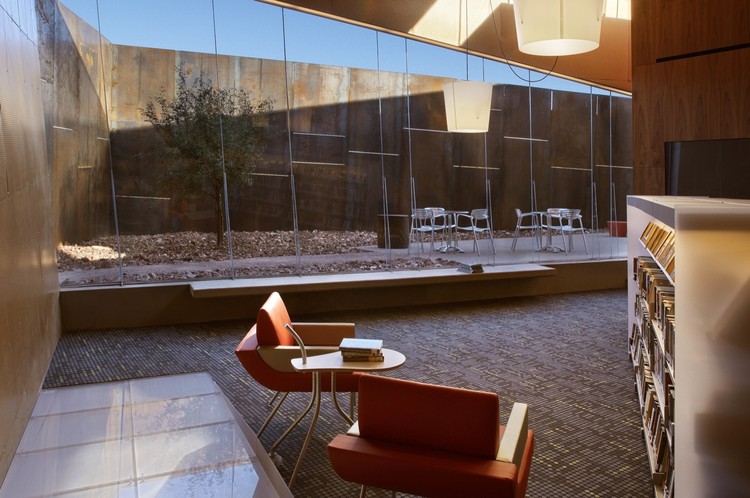

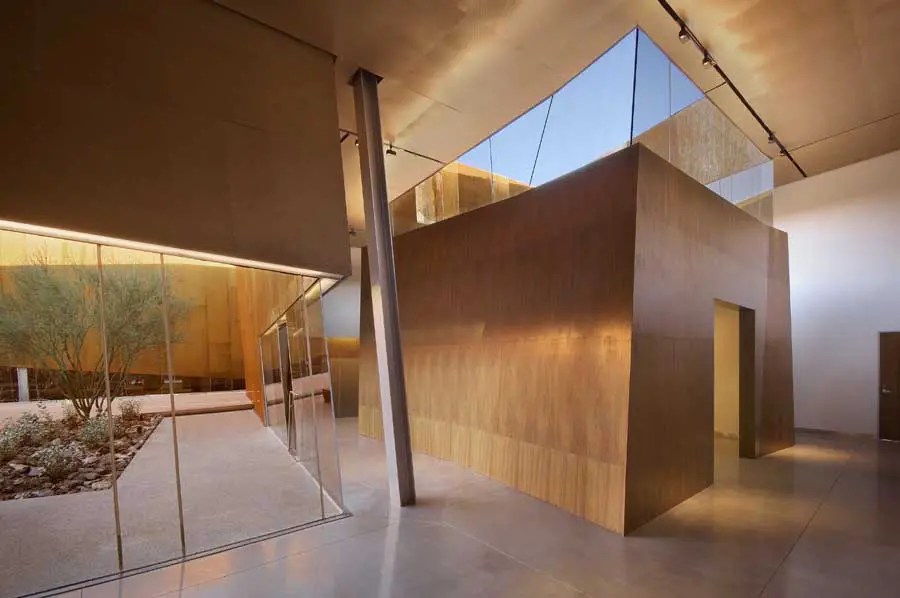
Inside, the library offers a contemporary space that includes a popular library with a 120,000-volume collection, a coffee bar, children’s program room, multipurpose rooms, computer training center, and a dedicated teen area. The central courtyard, adorned with a singular tree and a reflecting pool, serves as a tranquil gathering space, reinforcing the library’s connection to nature.
Tianjin Binhai Library – Tianjin, China
A futuristic marvel, the Tianjin Binhai Library, designed by the Dutch architectural firm MVRDV in collaboration with the Tianjin Urban Planning and Design Institute, has captivated the world with its innovative design. The library’s most striking feature is its spherical auditorium, dubbed “The Eye,” which appears to hover within the building’s atrium. Surrounding this centerpiece are terraced bookshelves that ripple across the walls and ceiling, creating a continuous landscape of books that invites exploration.
Covering 33,700 square meters, the library houses over 1.2 million books and offers various reading areas, lounges, and meeting spaces. The undulating shelves not only serve as storage but also function as stairs and seating, encouraging visitors to interact with the architecture.
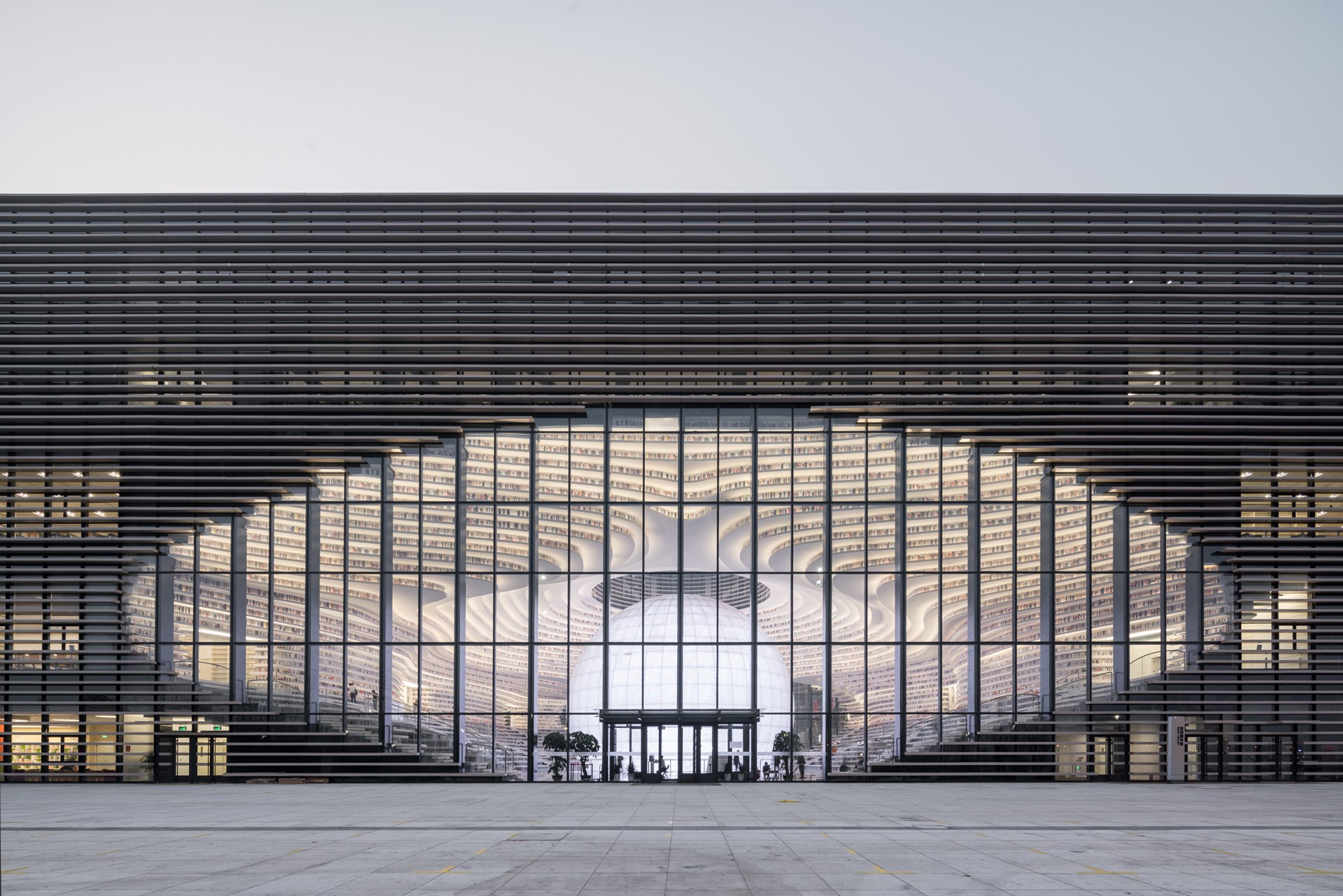
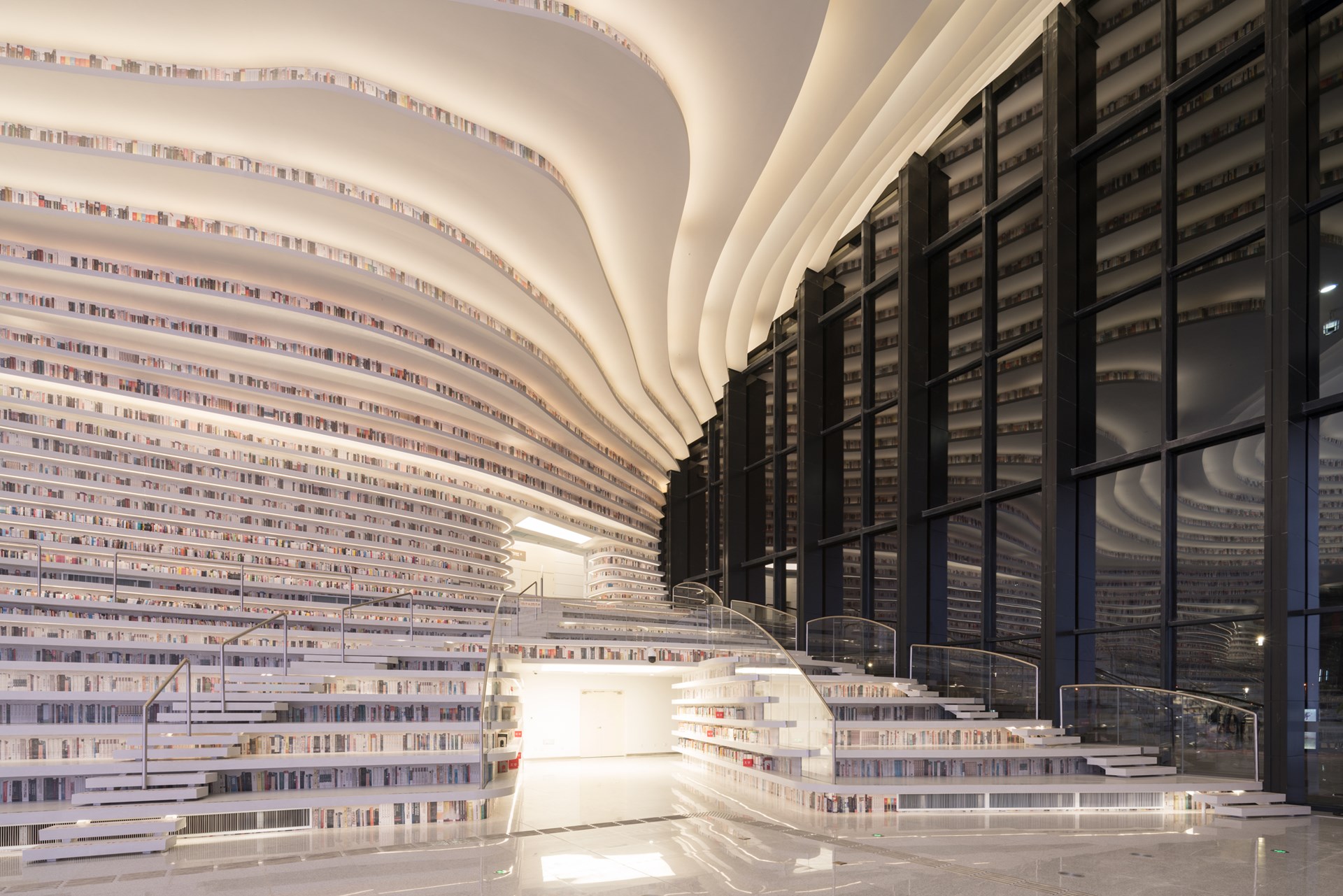
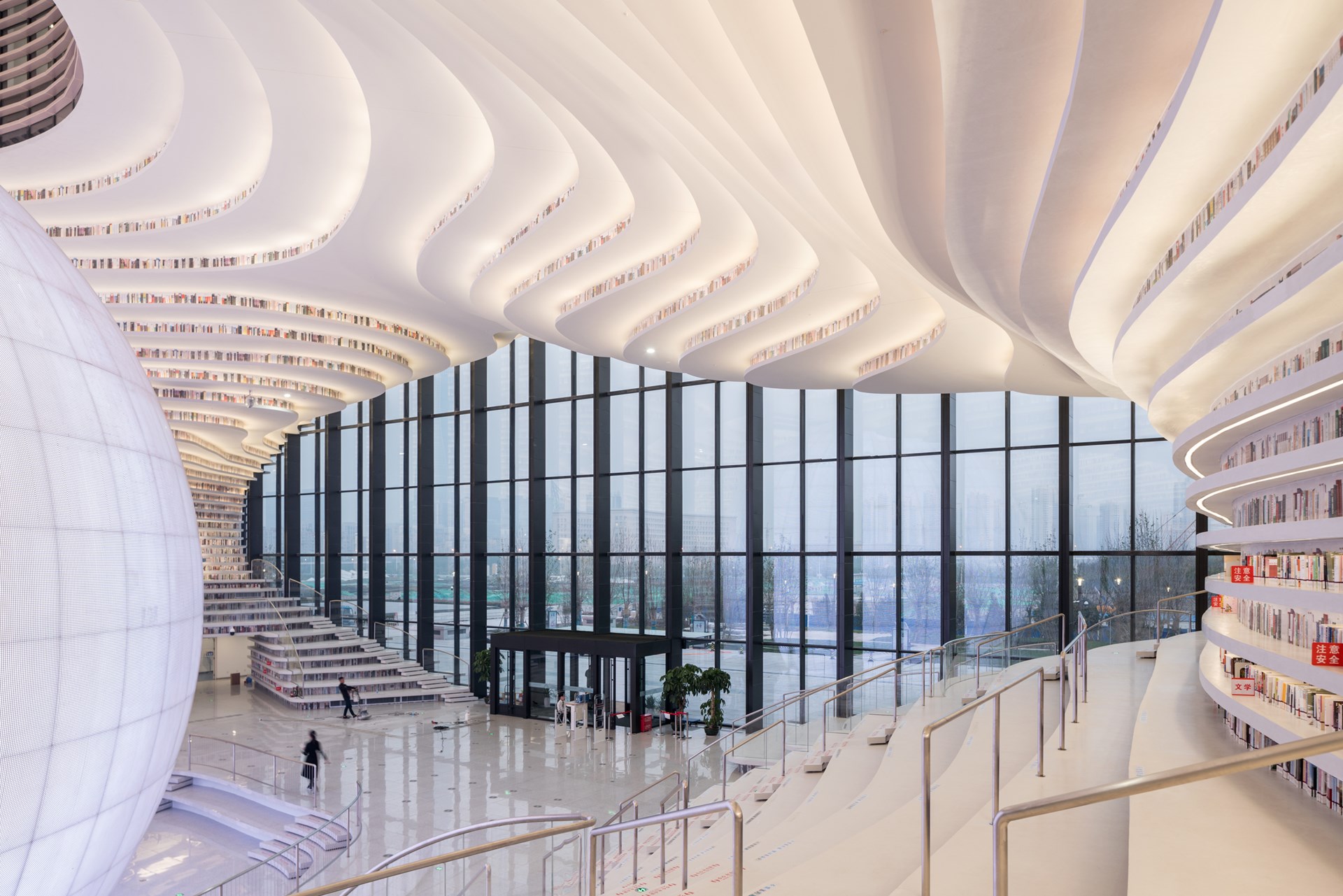
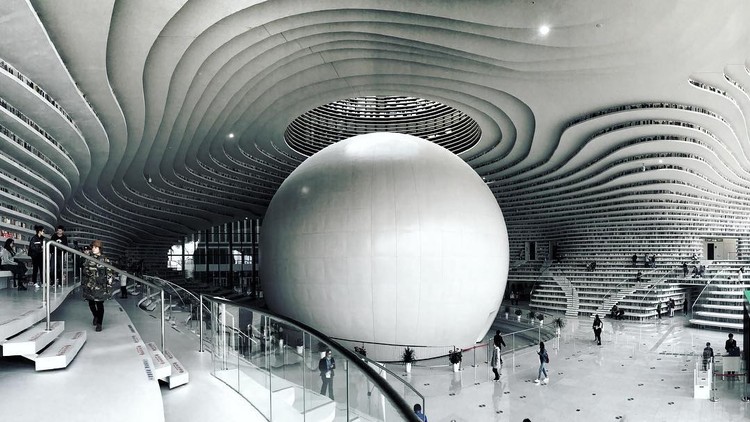
The design facilitates a seamless flow of movement, allowing patrons to navigate the space intuitively. Since its opening in 2017, the Tianjin Binhai Library has become a cultural landmark, attracting visitors worldwide and exemplifying how modern architecture can redefine traditional spaces.
Book Mountain – Spijkenisse, The Netherlands
In the heart of Spijkenisse, a town near Rotterdam, stands Book Mountain, a library that challenges conventional architectural norms. Also designed by MVRDV, this glass pyramid encloses a spiraling mountain of bookshelves, creating a transparent showcase of knowledge. The structure’s glass facade allows natural light to flood the interior, reducing the need for artificial lighting and creating an inviting atmosphere for readers.
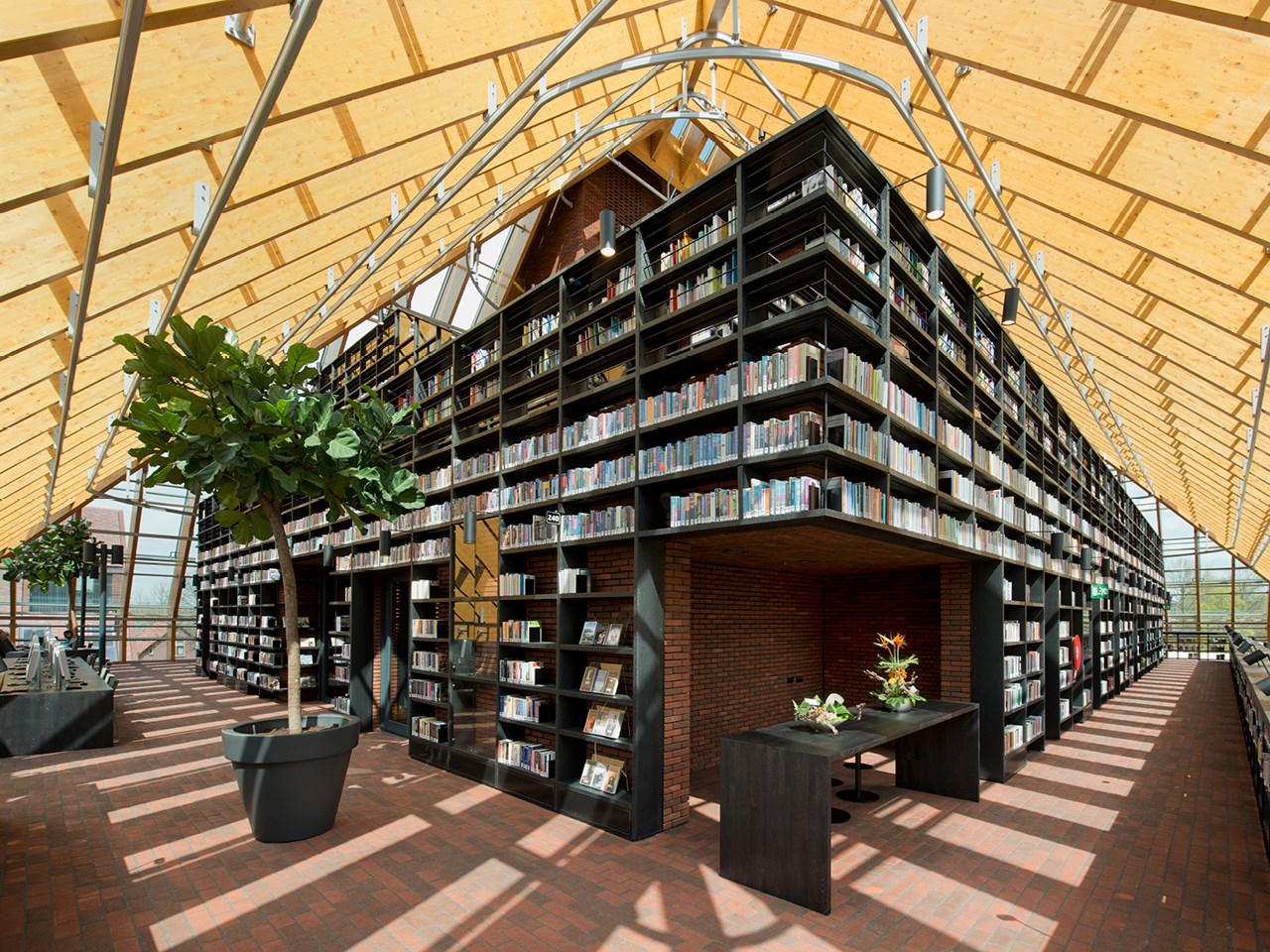
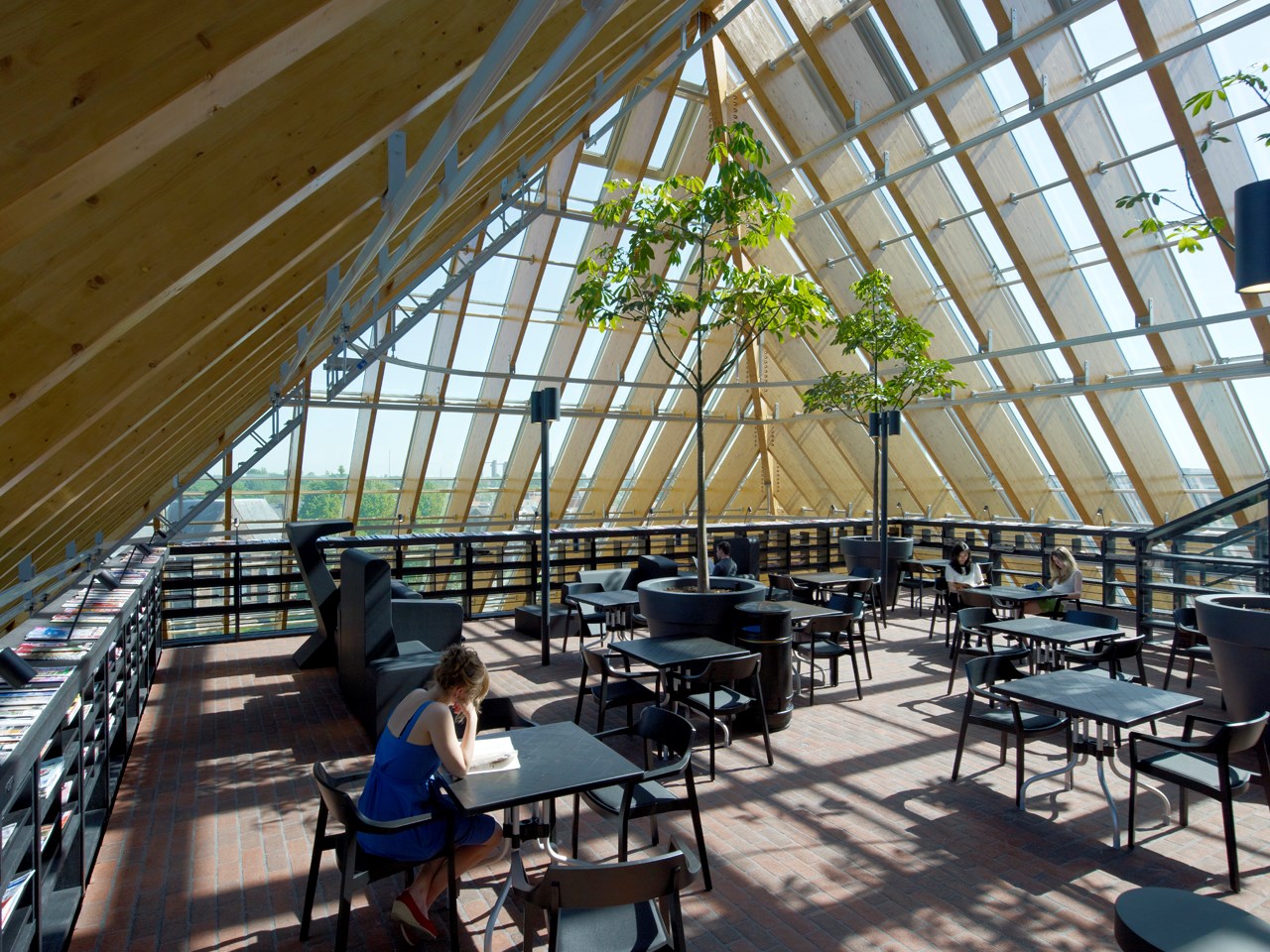
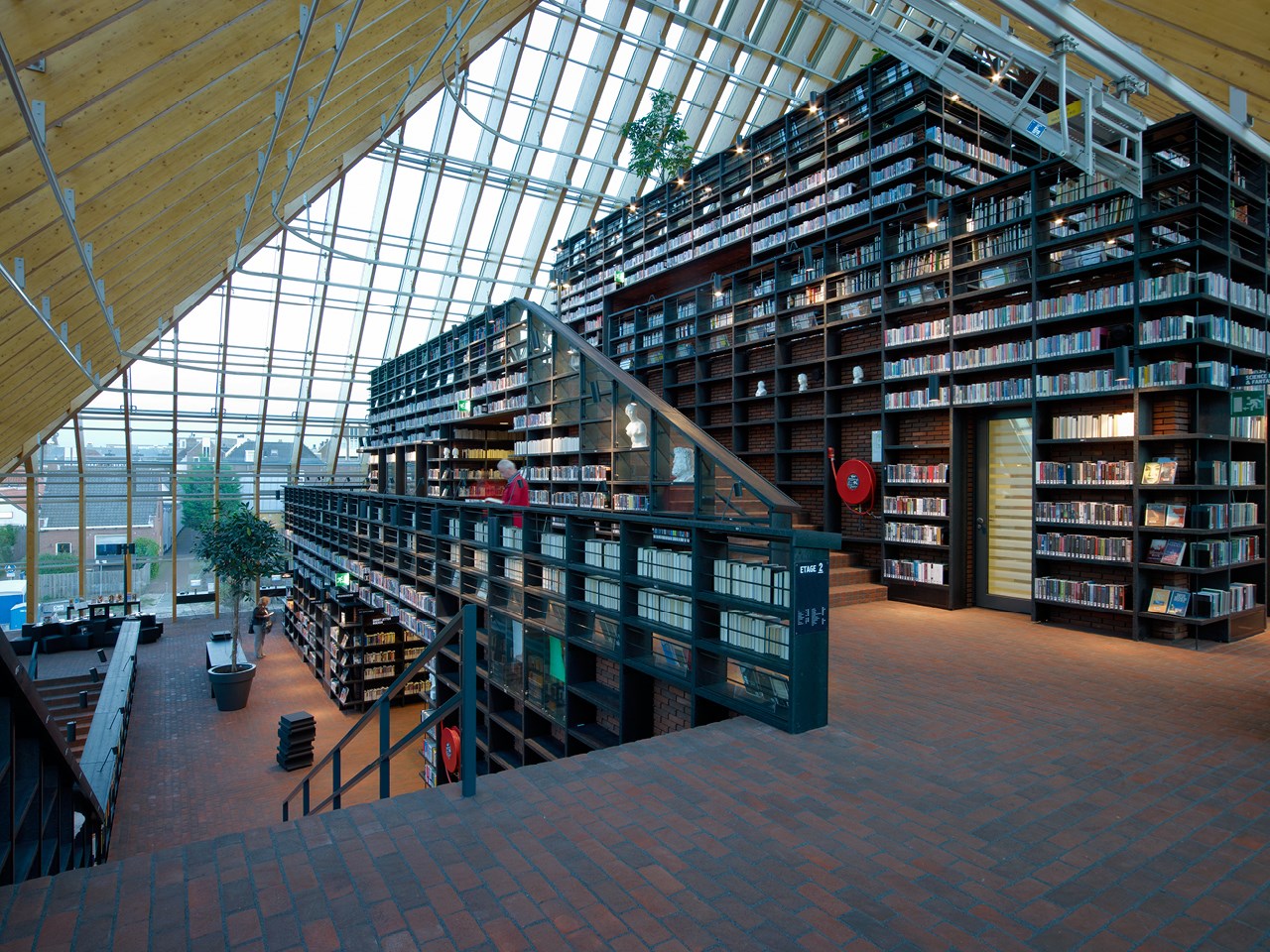

The library’s design addresses both aesthetic and functional considerations. The transparent exterior symbolizes openness and accessibility, while the interior’s ascending pathway leads visitors on a journey through the library’s extensive collection. Along the way, readers encounter various reading nooks, study areas, and even a cafe, all strategically placed to encourage engagement with the space. Book Mountain not only serves as a library but also as a community center, hosting events and exhibitions that enrich the cultural fabric of Spijkenisse.
Starfield Library – Seoul, South Korea
Located within the COEX Mall in Seoul’s bustling Gangnam district, the Starfield Library offers a serene oasis amidst the urban landscape. Unlike traditional libraries, Starfield is an open public space without doors or entry barriers, inviting passersby to immerse themselves in its literary treasures. Towering bookshelves reaching up to 13 meters high house over 50,000 books and magazines, creating a visually stunning backdrop that has made the library a popular spot for both locals and tourists.
The library’s design emphasizes accessibility and community engagement. Comfortable seating areas are scattered throughout the space, encouraging visitors to linger, read, and socialize. Regular cultural events, such as book talks, exhibitions, and performances, further enhance the library’s role as a cultural hub. Starfield Library exemplifies how modern libraries can adapt to contemporary lifestyles while preserving the essence of communal learning and exploration.
Mohammed Bin Rashid Library – Dubai, UAE
Dubai, a city known for its architectural marvels, added another jewel to its crown with the inauguration of the Mohammed Bin Rashid Library in 2022. Designed in the shape of an open book resting on a rehl (a traditional lectern used to hold the Quran), the library is a testament to the city’s commitment to knowledge and culture. The building’s unique form is not just symbolic but also functional, providing shaded areas that reduce the need for artificial cooling in the hot desert climate.
Spanning over 54,000 square meters, the library houses more than a million books, including printed and digital collections. It features specialized sections such as a children’s library, a youth library, a family library, and a business library, catering to diverse audiences. State-of-the-art facilities, including a theater, exhibition spaces, and a conference center, position the Mohammed Bin Rashid Library as a cultural and intellectual hub in the region.
The Timeless Allure of Libraries
Despite the rise of digital media and AI-driven knowledge platforms, libraries continue to serve as vital cultural and intellectual spaces. Their architectural brilliance transforms them into more than just reading rooms; they become immersive experiences that engage visitors on multiple sensory levels.
From the canyon-inspired Arabian Library to the futuristic Tianjin Binhai Library, each structure reflects a unique relationship between form, function, and culture.
The enduring appeal of these architectural wonders is a reminder that, in a world driven by screens and algorithms, there is still a deep human desire for the tactile pleasure of turning a page in a quiet, beautifully designed space.
As long as there are seekers of knowledge and lovers of literature, these grand libraries will continue to inspire, educate, and stand as timeless monuments to the pursuit of wisdom.





 GLAM / AMOUR
Hope you liked the article! Let us know what you think!