
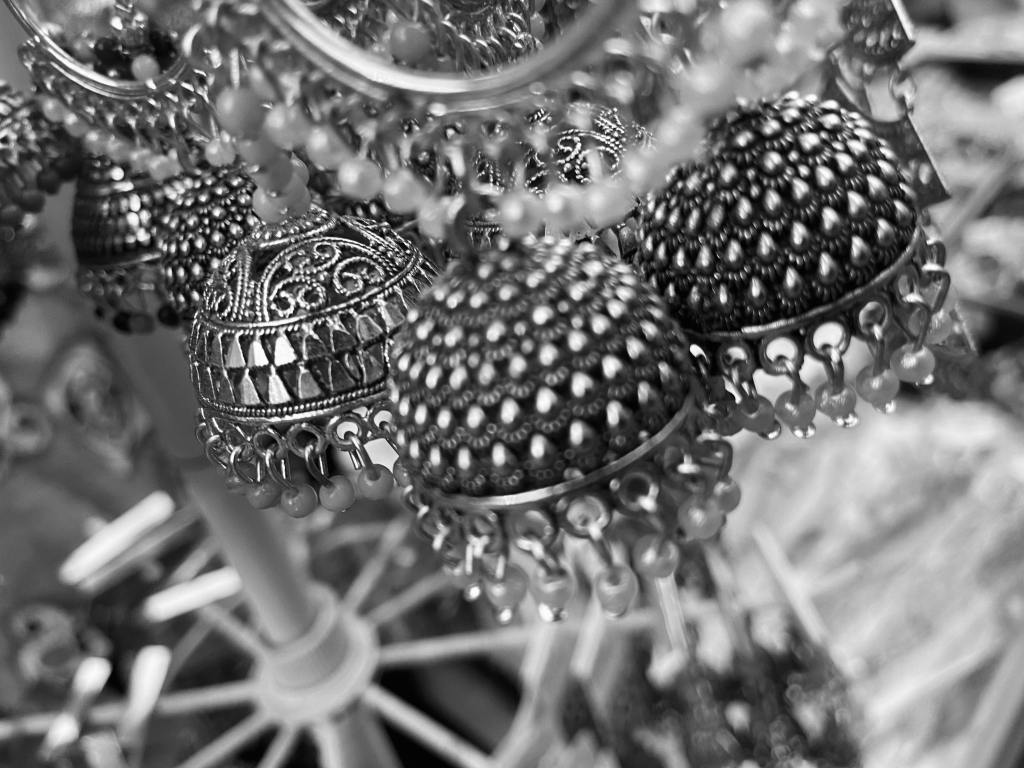
At Glam/Amour, we have always believed that true luxury is not only about beauty, but about the stories, heritage, and craftsmanship behind it. In Something Borrowed, Something Forgotten, we look beyond the runway’s polished surface to explore how high fashion continues to draw from India’s rich cultural legacy—while too often leaving its origins unnamed.
The Theatre of Luxury
There is a certain kind of theatre that belongs only to a Luxury Runway.
The lights sharpen. The room stills. The music begins with the solemn confidence of something expensive. And then, under the white heat of Milan or Paris, the familiar is transformed into fantasy. A sandal becomes Sculptural. A bell-shaped earring becomes Editorial. A centuries-old silhouette becomes “fresh” simply because it is being seen through the lens of a European fashion house.
Fashion has always thrived on illusion. But sometimes, its most convincing illusion is not Reinvention. It is re-packaging.
And nowhere has that illusion felt more striking in recent years than in the way high fashion continues to return to India—its craftsmanship, its jewellery, its textures, its drape, its visual richness—while too often failing to say, plainly and proudly, where the beauty began.
India: The Original Muse
India has always been one of fashion’s great love affairs.
Long before luxury houses built their empires on heritage, India had already given the world a masterclass in textile artistry. Its cottons travelled across oceans. Its dyes coloured global trade. Its embroideries turned fabric into ornament. Its jewellery traditions made decoration feel almost ceremonial. From the intricate gleam of zardozi to the lyrical geometry of jamdani, from the softness of handloom weaves to the enduring poetry of the jhumka, India has shaped the language of beauty for centuries.
That influence is not subtle. It is foundational.
And yet, for all the admiration India inspires, luxury fashion has often loved it best when it can be rendered nameless—when a cultural object becomes simply “artisan-inspired,” “vintage,” “bohemian,” “textural,” or “global,” rather than specifically, unmistakably Indian.
When Inspiration Becomes Anonymous
This past year, that habit became impossible to ignore. It arrived, perhaps most memorably, in the shape of a Sandal.
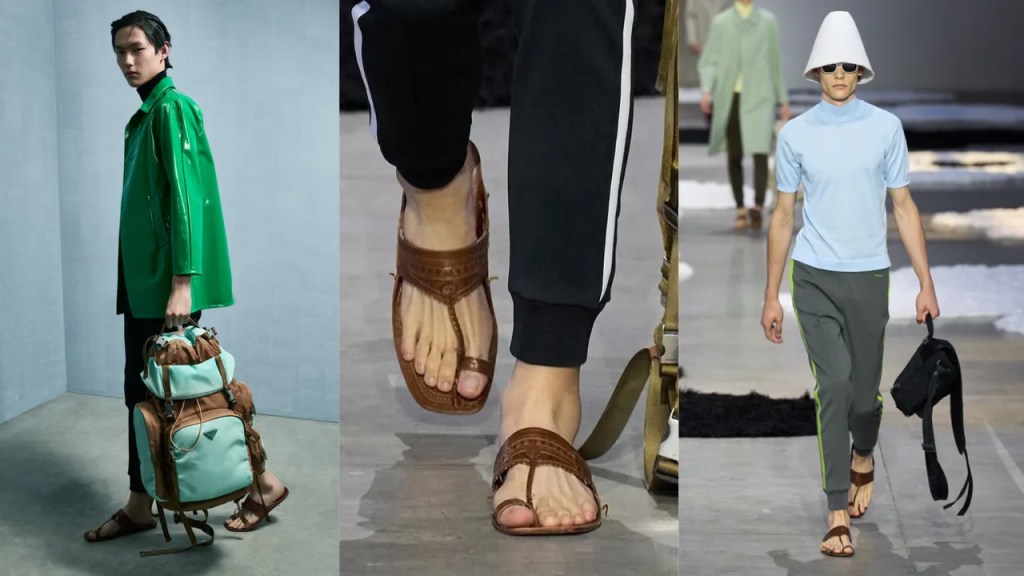
At a Prada runway show, a model stepped out in flat leather sandals that many viewers immediately recognized as bearing a striking resemblance to Kolhapuri chappals—the iconic handcrafted footwear long associated with western India.
To some in the room, they may have read as quiet luxury: understated, elegant, intelligent in that studied way luxury brands like to call effortless. But to countless Indians watching from afar, the design was instantly familiar. This was not some abstract artisanal mood. This was a silhouette with lineage.
Kolhapuri’s on the Runway
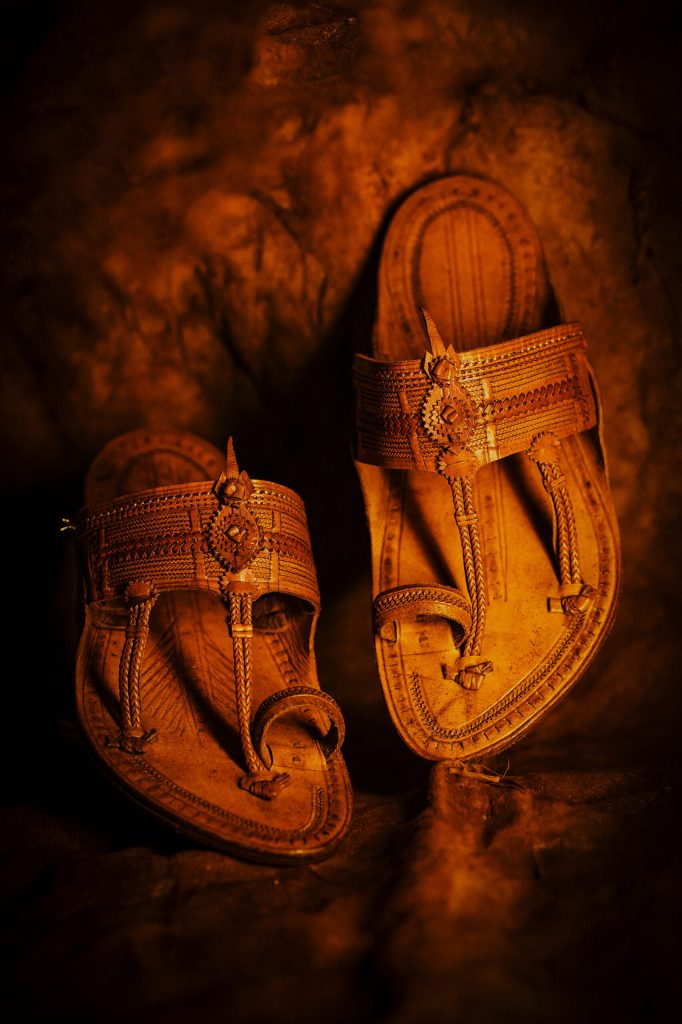
A Kolhapuri is not merely a sandal. It is a living craft tradition. It carries the weight of region, of generational skill, of local identity. It is shaped by hands that have repeated and refined the same techniques over decades, even centuries. It belongs to a cultural and economic ecosystem that predates modern luxury marketing entirely.
To see something so specific glide down a European runway without immediate, explicit acknowledgment felt less like tribute and more like an old fashion habit in its latest, most polished form.
Eventually, Prada acknowledged the Indian roots of the design after criticism mounted. But by then, the real issue had already been exposed. The question was never whether the sandal had Indian origins. The question was why those origins were not named instinctively—why recognition arrived only after backlash had made silence uncomfortable.
That is the pattern the industry still struggles to confront.
In India, Kolhapuris are deeply familiar—woven into daily life, regional pride, local commerce, and inherited style. Yet once that same design language is filtered through a European luxury house, it is suddenly elevated. Reframed. Repriced. Reintroduced to the world as something aspirational.
And that is the quiet cruelty of appropriation in fashion. It is not only that something is borrowed. It is that the borrowed thing becomes more desirable, more editorial, and more profitable only after it has been separated from the people who made it meaningful in the first place.
Jhumkas and the Price of Forgetting
The sandal was not an isolated moment.
Soon after, another familiar form caught the light—this time not under a hemline, but beside a face.


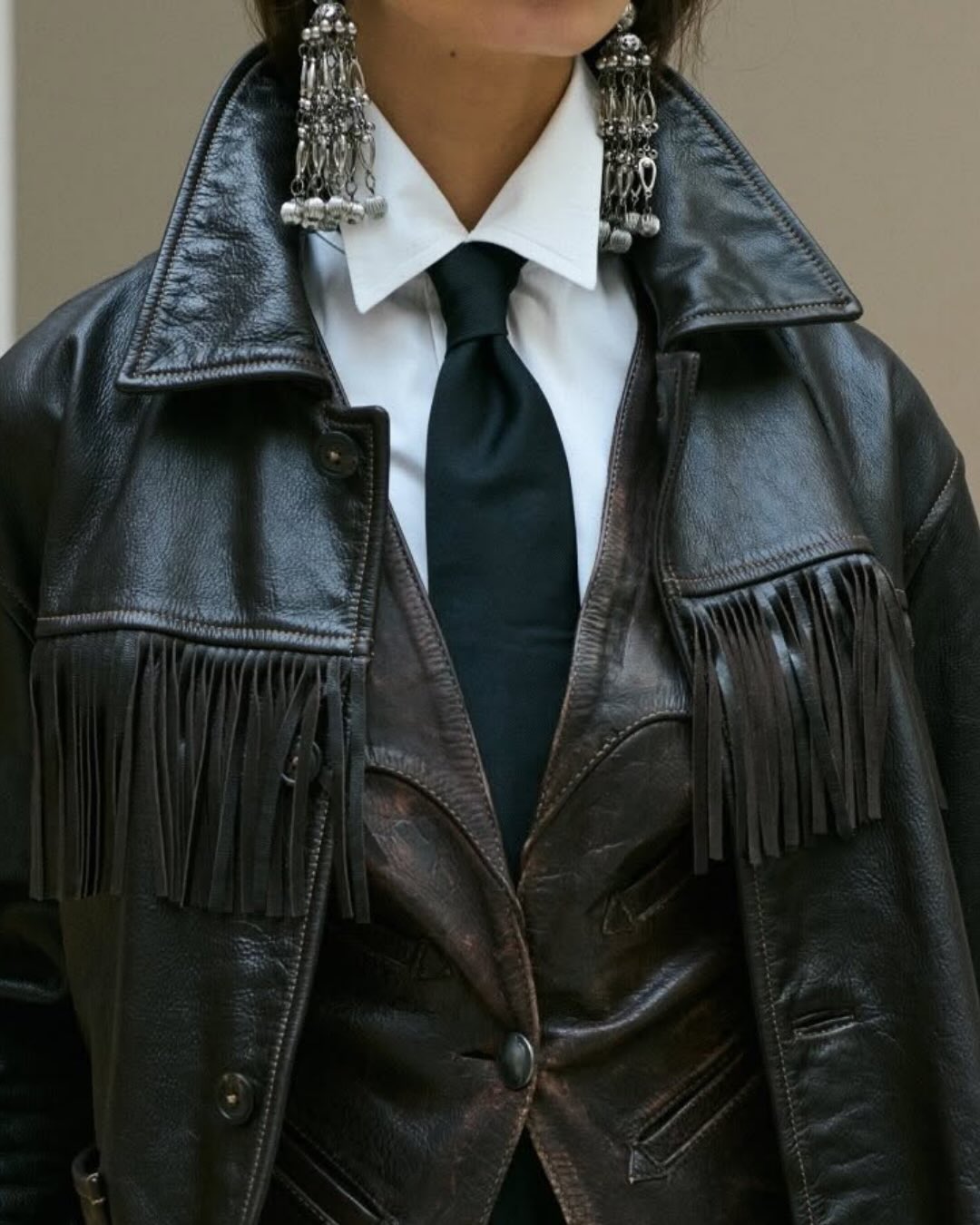
At Paris Fashion Week, jhumka-style earrings worn during a Ralph Lauren presentation sparked another conversation around cultural appropriation. To those outside South Asia, they may have seemed like ornate vintage accessories, the sort of detail fashion often uses to create a sense of worldly glamour. But for Indian and South Asian viewers, they were immediately legible.
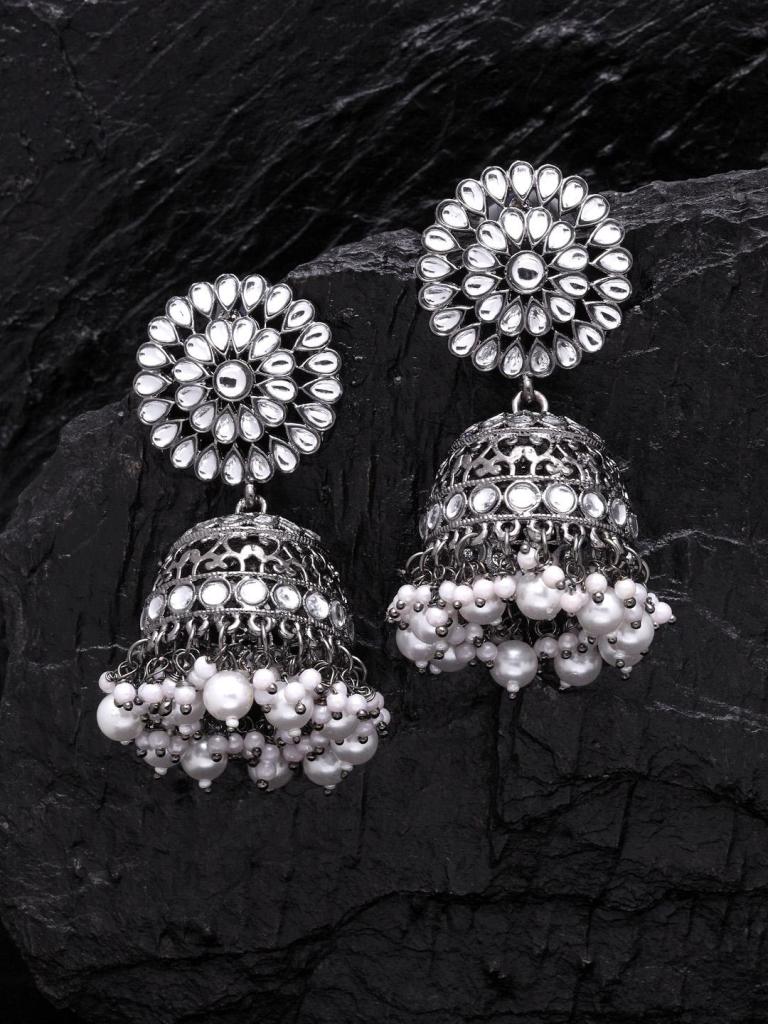
These were Jhumkas: bell-shaped earrings with a long and cherished history across the subcontinent, woven into weddings, festivals, heirloom boxes, and everyday adornment.
Again, the debate was never about whether the earrings were beautiful. Of course they were.
The issue was that something so culturally specific could appear on one of fashion’s most powerful stages and still be treated as though it were merely atmospheric—an accessory without ancestry, a decorative flourish detached from the people and histories that shaped it.
The Invisible Atelier
Behind the spectacle of the runway, far from the front row and the flash of cameras, there exists another world—quieter, slower, infinitely more intricate.
It is here, in ateliers across India, that some of luxury fashion’s most breathtaking details are brought to life.
Over the last few years, India has steadily cemented its position as one of the world’s most important centers for couture embroidery. From the delicate precision of zari to the fine hand of chikankari and the meticulous looping of tambour embroidery, Indian artisans have long mastered techniques that many luxury houses now depend on to achieve their most complex visions.
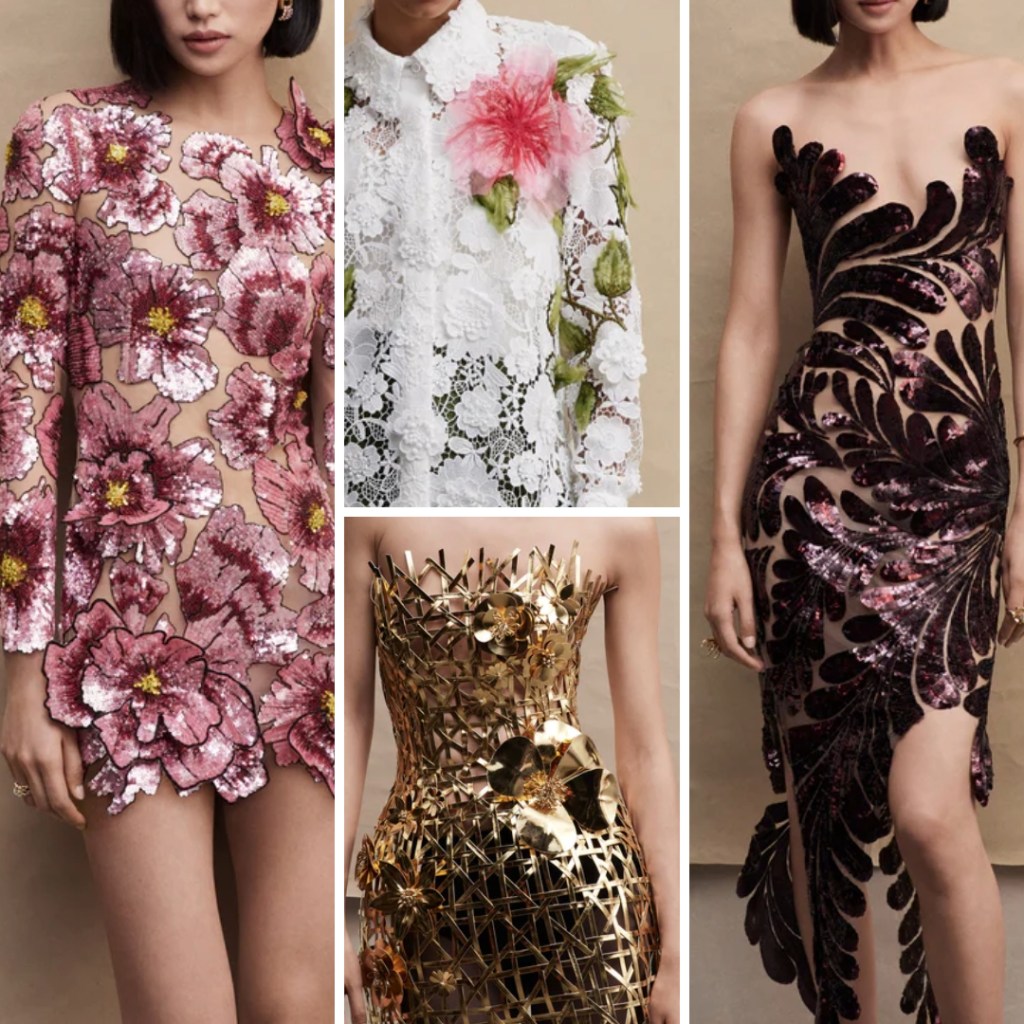
At houses like Oscar de la Renta, recent collections have leaned heavily on intricate hand embroidery to create sculptural textures—botanical motifs that rise from the fabric, beadwork that catches light like stained glass, surfaces that feel almost architectural in their precision.
Much of this work is quietly developed in collaboration with Indian ateliers, where embroidery is not treated as embellishment, but as structure itself.
Similarly, under the direction of Fausto Puglisi, Roberto Cavalli has explored the marriage of Italian glamour with deeply rooted Indian techniques—introducing garments that weave together bandhani tie-dye traditions with intricate gold-thread embroidery, each piece carrying the layered imprint of two worlds.
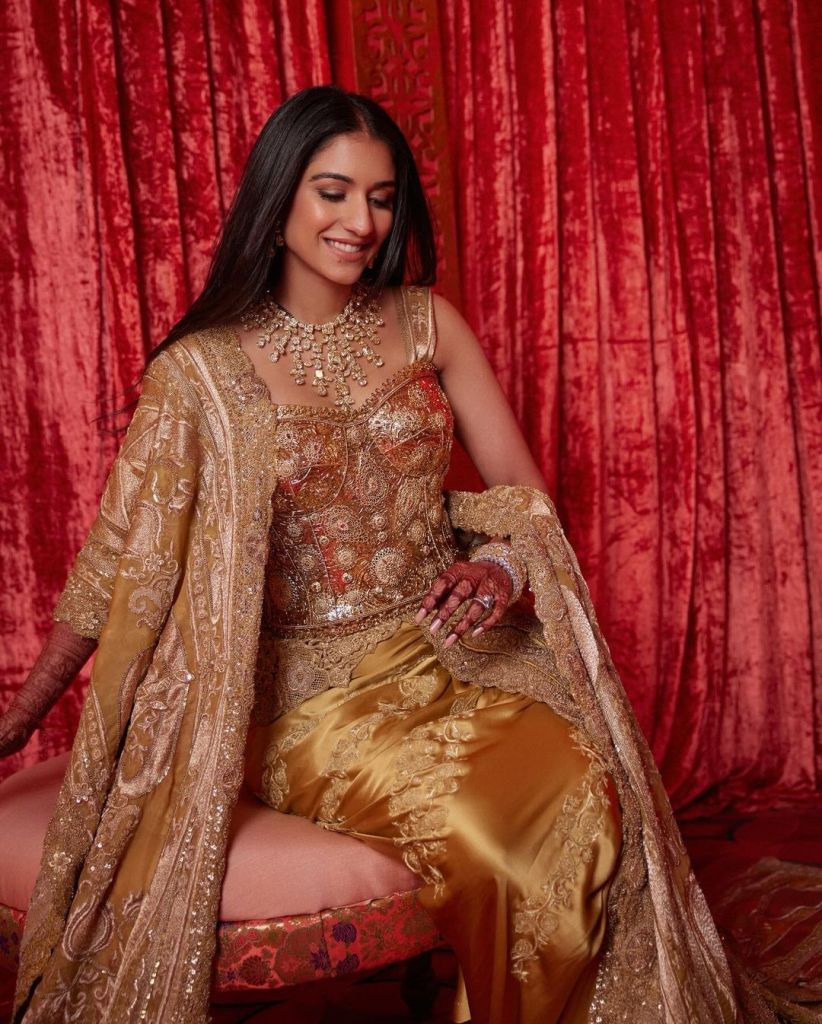
And at Dolce & Gabbana, the opulence of baroque-inspired collections often echoes the richness of Indian zardozi—heavy metallic threadwork, elaborate motifs, and densely embellished surfaces that blur the line between garment and ornament.
The influence is everywhere. And yet, the acknowledgment is not.
For all the reverence luxury fashion claims to hold for craftsmanship, the artisans behind these techniques are often rendered invisible in the final narrative. The garment walks the runway. The label takes the bow. The embroidery—hours, days, sometimes weeks of labour—becomes part of the allure, but rarely part of the story.
This is the paradox at the heart of modern luxury.
The industry depends on the skill, heritage, and precision of Indian craftsmanship, yet continues to position that contribution as background rather than authorship. The ateliers are essential, but unnamed. The techniques are celebrated, but not always credited. The hands that create the magic remain just out of frame.
And perhaps that is the most refined illusion of all.
Because what appears, on the runway, as effortless beauty is often the result of extraordinary labour—labour that begins long before the spotlight, in places where luxury is not performed, but painstakingly made.
A Moment That Cannot Be Ignored
And yet—despite all the quiet borrowing, the softened origins, the selective memory—there are moments when India does not need to be rediscovered, renamed, or reinterpreted.
On nights like the Met Gala, where fashion is at its most theatrical, its most scrutinised, its most symbolic, Indian design does not whisper in the background. It commands the room.
At the 2026 MET Gala where the theme was “Costume Art”, celebrating the interplay between the human body and clothing, with a corresponding dress code of “Fashion is Art”, that presence felt particularly undeniable.
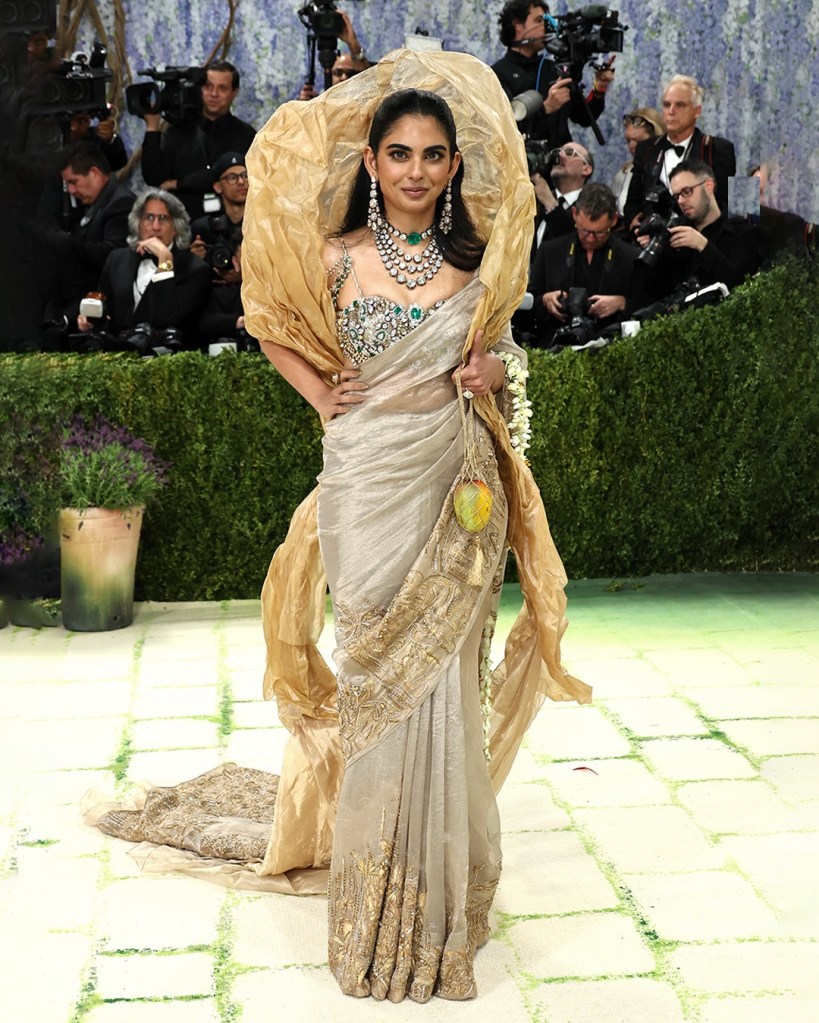
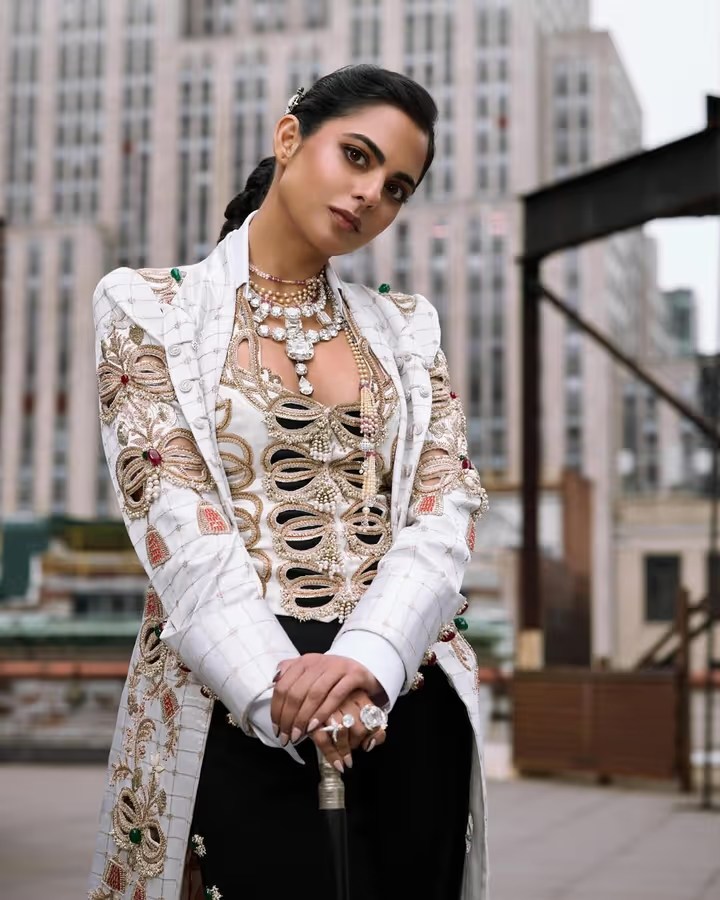
Isha Ambani attended the 2026 Met Gala in a custom, gold-woven sculptural saree designed by Gaurav Gupta. The look honored Indian heritage with a modern twist, featuring a blouse with over 1,800 carats of diamonds and WWD described it as a blend of traditional textiles and avant-garde couture. She styled the look with an “aam” (mango) accessory, showcasing cultural storytelling.
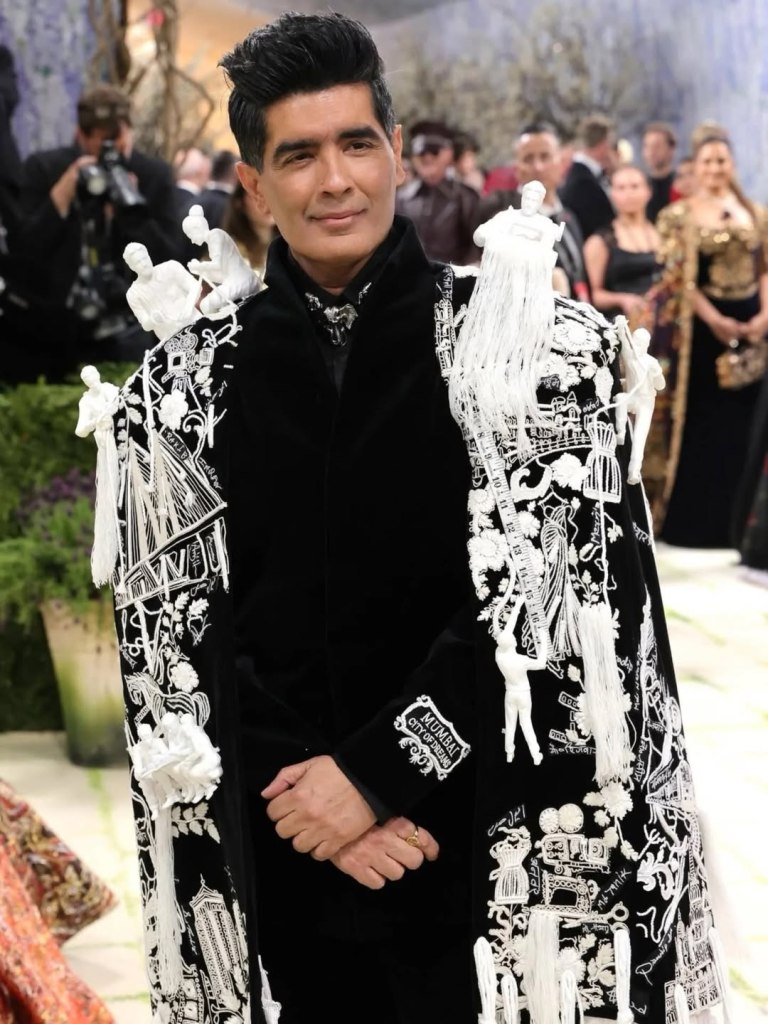
For his second Met Gala appearance in 2026, Manish Malhotra wore a bespoke black and white bandhgala with an architectural cape honoring Indian artisans. The look, reflecting “Mumbai: City of Dreams,” featured 960 hours of work by 50 artisans, with their signatures embroidered into the lining and 3D karigar details.
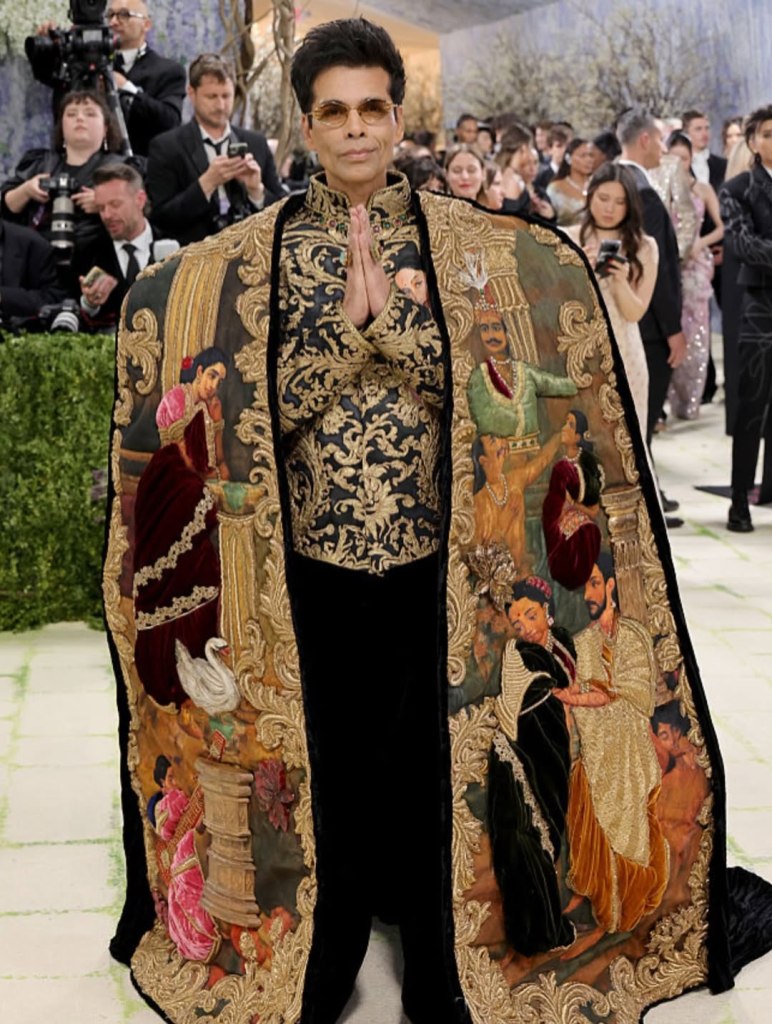
Karan Johar made a historic Met Gala 2026 debut wearing a custom Manish Malhotra ensemble inspired by painter Raja Ravi Varma, designed for the “Costume Art” theme. The look featured a black velvet, hand-painted cape and structured Bandhgala, requiring 5,600 hours of craftsmanship to create a “living canvas”
Indian designers didn’t present fashion in abstraction—they told stories. Textiles carried memory, and embroidery became expression. Every detail had lineage.
This wasn’t inspiration. It was authorship.
While luxury fashion often borrows from India in fragments, on one of the world’s most visible stages, Indian fashion appeared complete—unfiltered, unapologetic, and rooted in its own narrative.
A reminder that Indian craftsmanship is not a hidden influence, but a defining force—one with a history, a name, and a voice that cannot be erased. And perhaps that is the shift the industry can no longer ignore.
Because when Indian fashion speaks for itself, it doesn’t fade into the background—it leads.




Hope you liked the article! Let us know what you think!